

TMJ Treatment Specialist in San Jose, CA
If you have jaw pain caused by temporomandibular joint (TMJ) disorder, Dr. Victoria Vuong in San Jose, CA, will help relieve your discomfort. TMJ disorder can cause a variety of symptoms, including jaw pain, headaches, difficulty chewing, and clicking or popping sounds in the jaw. At Selective Dental, we provide personalized treatment options to address the root causes of TMJ and help restore comfort and function to your jaw. Don’t let TMJ pain affect your quality of life—visit us today to learn more about how we can help. For more information, contact us today or schedule an appointment online. We are conveniently located at 3151 South White Road, Suite 203 San Jose, CA 95148.
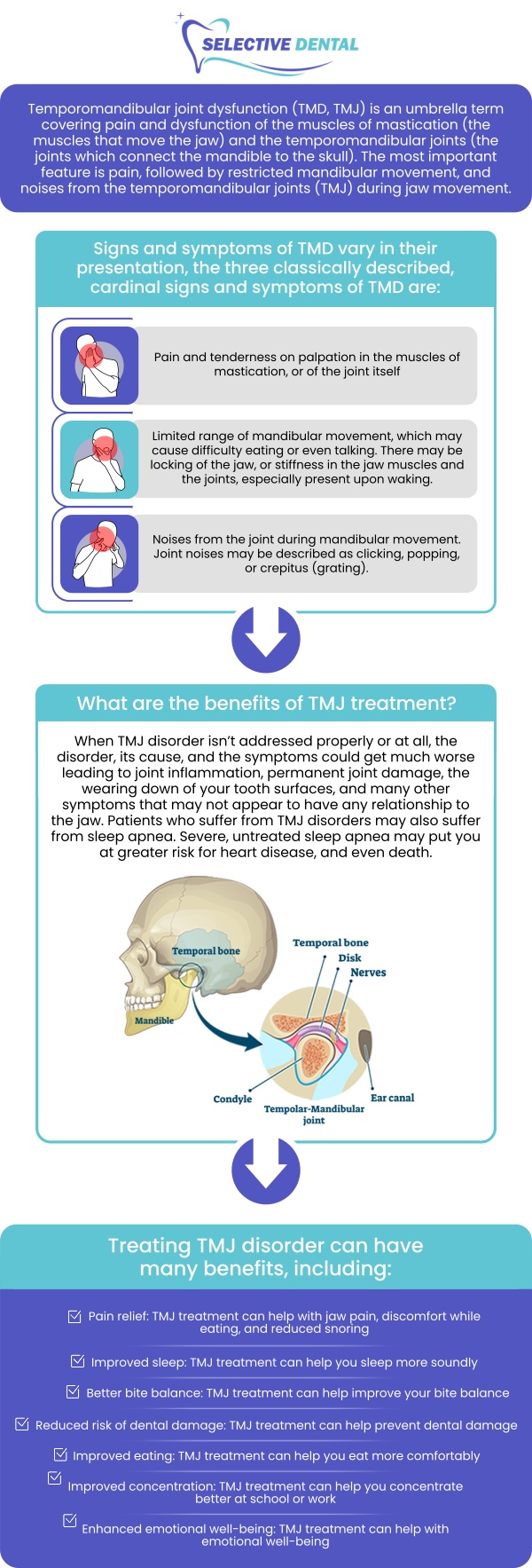
Table of Contents:
What is the main cause of TMJ?
What are the symptoms of TMJ?
Is TMJ a medical or dental problem?
Can TMJ happen suddenly?
Can TMJ disorder cause headaches?
Why does my jaw click when I chew?
Can teeth grinding make TMJ symptoms worse?
Can TMJ disorder cause difficulty opening the mouth?
Does every TMJ disorder require treatment?
Can TMJ pain affect chewing?
How is TMJ disorder evaluated?
How Can Dr. Victoria Vuong, DDS, and Our Team at Selective Dental Help With TMJ Symptoms?
What Financing Options Are Available for TMJ Care at Selective Dental?
What Languages Are Available for TMJ Patients at Selective Dental?
Where Can Bay Area Patients Find TMJ Care Near San Jose?
The temporomandibular joints (TMJs) are located on both sides of the jaw and connect the lower jawbone to the skull. These complex joints work with muscles, ligaments, and a small cushioning disc to allow the jaw to open, close, and move from side to side during chewing, speaking, yawning, and other everyday activities.
TMJ symptoms can vary considerably from one person to another. Some patients experience jaw or facial pain, stiffness, painful clicking or popping, headaches, difficulty opening the mouth, or episodes in which the jaw feels locked. Because jaw pain can have several possible causes, a dental evaluation can help determine whether symptoms appear to involve the TMJ, chewing muscles, teeth, or another condition.
There is not one single cause of every TMJ. TMJs can involve problems within the jaw joint itself, the muscles used for chewing, or a combination of factors. In some patients, the exact cause may not be clear. Conditions associated with TMJ symptoms can include jaw-joint changes, arthritis, disc problems, excessive strain on the chewing muscles, and other mechanical or musculoskeletal factors.
Teeth grinding or clenching, also called bruxism, can contribute to jaw discomfort in some people by placing repeated stress on the jaw muscles and joints. Stress does not automatically cause a TMJ, but it may contribute to clenching or muscle tension in some patients. Jaw or facial trauma and degenerative or inflammatory joint conditions can also contribute to certain TMJs. Because multiple factors may be involved, an individualized examination is important before treatment is recommended.
Common TMJ symptoms can include pain in the jaw joint or chewing muscles, facial discomfort, jaw stiffness, painful clicking or popping, difficulty opening or closing the mouth, and changes in jaw movement. Some patients also experience headaches or pain that extends toward the neck. A jaw that catches or locks may also indicate a problem involving the joint or its internal structures.
Not every clicking or popping sound indicates that treatment is necessary. Jaw sounds that occur without pain or restricted movement can be common. However, recurring pain, limited movement, locking, or difficulty chewing should be evaluated. A dental examination can also help distinguish TMJ-related symptoms from tooth, gum, or other facial pain conditions that may require different care.
TMJ can involve both dental and medical considerations because the jaw joints, chewing muscles, teeth, nerves, and surrounding structures can all contribute to facial or jaw symptoms. Dentists commonly evaluate patients with jaw pain because an examination of the bite, teeth, jaw movement, chewing muscles, and oral structures may provide important information about possible causes.
Some patients may benefit from care involving additional healthcare professionals, particularly when symptoms are complex or related to arthritis, neurological conditions, persistent pain, or significant joint disease. There is no single treatment that is appropriate for every TMJ, so care should be matched to the individual diagnosis and symptoms.
Yes. TMJ symptoms can sometimes appear suddenly, although they may also develop gradually. Sudden jaw pain or difficulty moving the jaw can occur after excessive jaw use, an acute joint problem, or other changes affecting the jaw muscles or joint. In other patients, symptoms related to grinding, clenching, arthritis, or chronic muscle tension may become noticeable more gradually.
Certain movements or activities may also temporarily aggravate symptoms, such as prolonged chewing, opening the mouth widely, or repeatedly placing stress on sensitive jaw muscles or joints. Because sudden jaw or facial pain is not always caused by TMJ, a professional evaluation is important when discomfort is severe, persistent, or accompanied by significant difficulty opening or closing the mouth.
Frequently Asked Questions About TMJ Disorder
Yes. Headaches can occur with some TMJs, particularly when the chewing muscles or jaw joints are involved. A dental evaluation can help determine whether jaw-related problems may be contributing to recurring discomfort.
Clicking may occur when structures within the jaw joint move during opening or closing. Clicking without pain or restricted movement does not always require treatment, but painful or persistent clicking should be evaluated.
Teeth grinding or clenching may place additional strain on the jaw muscles and can contribute to jaw pain, muscle fatigue, or headaches in some patients.
Yes. Some TMJs can cause stiffness, restricted jaw movement, or locking that makes opening or closing the mouth difficult. Persistent movement problems should be professionally evaluated.
No. Some TMJ symptoms may improve without extensive treatment, and not every painless clicking sound requires intervention. Persistent pain, locking, or functional problems are stronger reasons to seek an evaluation.
Yes. TMJ can cause pain or stiffness in the jaw joint and chewing muscles, making chewing uncomfortable for some patients.
Evaluation may include discussing symptoms, examining jaw movement, checking the muscles and joints, and assessing dental or oral factors that may contribute to discomfort. Additional testing may be considered depending on the findings and complexity of the symptoms.
At Selective Dental in San Jose, CA, Dr. Victoria Vuong, DDS, evaluates patients experiencing jaw pain, tenderness, clicking, restricted movement, headaches, or other symptoms that may be associated with TMJ. Dr. Vuong considers the patient’s symptoms, dental history, jaw movement, chewing muscles, teeth, and other relevant findings to help determine what may be contributing to the problem.
Dr. Vuong remains the primary dentist guiding each patient’s evaluation and treatment recommendations, while our team at Selective Dental focuses on clear communication and personalized care. Because TMJs can have different causes and levels of severity, treatment recommendations are based on the individual patient’s findings rather than a one-size-fits-all approach.
Selective Dental offers flexible financing through CareCredit, LendingClub, and Sunbit for eligible patients who want help managing dental treatment expenses. Promotional 0% interest options may be available when qualifying balances are paid within 12 months, subject to approval and applicable terms. Established patients may also be able to divide their co-pay portion into two or more interest-free payments, helping make recommended dental care easier to budget.
Clear communication is especially important when describing jaw pain, headaches, clicking, locking, and other TMJ symptoms. Dr. Victoria Vuong, DDS, and our team at Selective Dental can assist patients in English, Spanish, Chinese, Filipino, and Vietnamese, helping individuals and families better understand their evaluation, possible causes, and recommended next steps.
Patients from Evergreen, East San Jose, Milpitas, Cupertino, Los Gatos, Campbell, Santa Clara, and surrounding Bay Area communities can visit Selective Dental in San Jose, CA, for a personalized evaluation of TMJ-related symptoms. Dr. Victoria Vuong, DDS, and our team help patients understand possible causes of jaw discomfort and discuss appropriate next steps based on their individual symptoms, dental health, and jaw function. For more information, contact us today or schedule an appointment online. We are conveniently located at 3151 South White Road, Suite 203 San Jose, CA 95148. We proudly serve patients throughout San Jose CA, the Bay Area and surrounding Santa Clara County—including Evergreen CA, Silver Creek CA, Berryessa CA, Alum Rock CA, Willow Glen CA and neighboring Milpitas CA, Santa Clara CA, and Campbell CA.

Check Out Our 5 Star Reviews


Additional Services You May Need
- Dental Implants
- Dental Bridges
- Dental Crowns
- Gum Disease Treatment
- Smile Makeover
- Root Canal Therapy
- Teeth Whitening
- Dental Cleanings
- Veneers
- Cracked Tooth Treatment
- Emergency/Same-Day Services
- General Dentistry
- Cosmetic Dentistry
- Family Dentistry
- Children Dentistry
- Aesthetic Dentistry
- TMJ Treatment
- Extractions
- Emergency Dental Appointments
- Mouth Guards and Night Guards
- Ortho Retainers
- Dental Implant Crowns
- Nitrous Oxide Sedation Dentistry

Additional Services You May Need
- Dental Implants
- Dental Bridges
- Dental Crowns
- Gum Disease Treatment
- Smile Makeover
- Root Canal Therapy
- Teeth Whitening
- Dental Cleanings
- Veneers
- Cracked Tooth Treatment
- Emergency/Same-Day Services
- General Dentistry
- Cosmetic Dentistry
- Family Dentistry
- Children Dentistry
- Aesthetic Dentistry
- TMJ Treatment
- Extractions
- Emergency Dental Appointments
- Mouth Guards and Night Guards
- Ortho Retainers
- Dental Implant Crowns
- Nitrous Oxide Sedation Dentistry



 Send Text
 How May I Help You?