

When Should You Consider Treatment for TMJ Disorder?
TMJ disorder can involve the jaw joints, chewing muscles, teeth, and surrounding structures, which is why an accurate evaluation is important before treatment begins. At Selective Dental, Dr. Victoria Vuong, DDS, assesses jaw movement, symptoms, bite-related concerns, and imaging findings when appropriate to identify possible causes of discomfort. Based on the evaluation, Dr. Vuong develops a personalized treatment plan focused on improving jaw comfort, reducing strain, and supporting better function. For more information, contact us or book an appointment online. We are conveniently located at 3151 South White Road, Suite 203, San Jose, CA 95148.
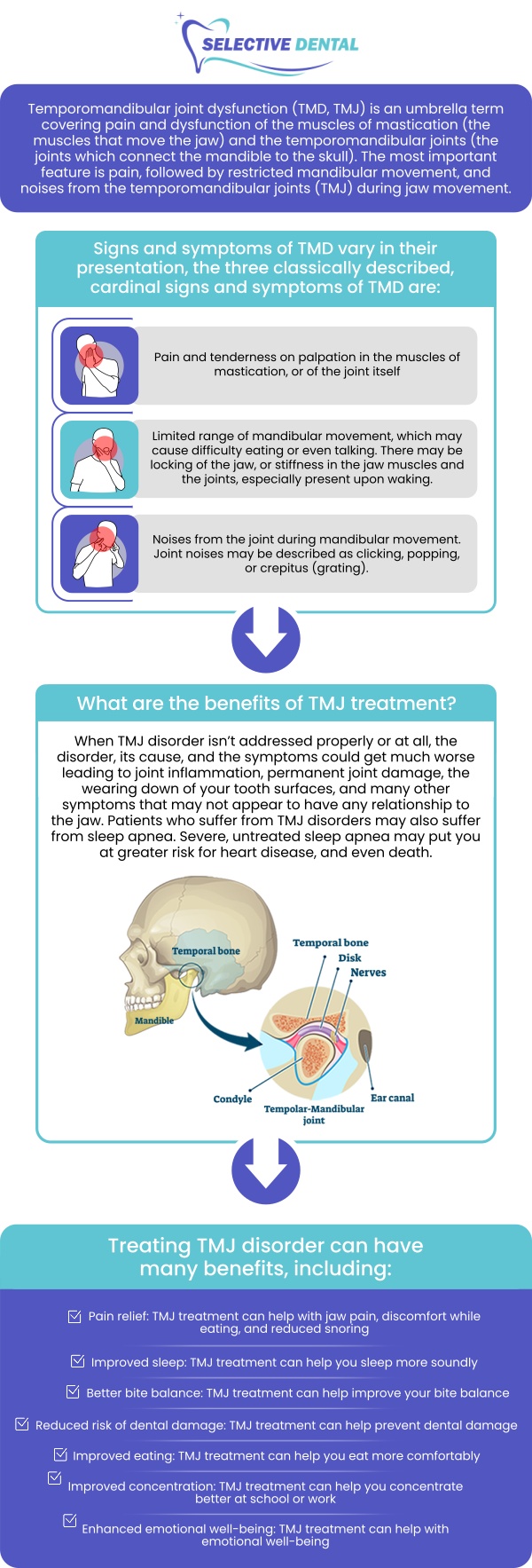
Table of Contents:
What treatment options may be used for TMJ disorder?
Can a night guard help with TMJ-related jaw pain?
How long does TMJ treatment take to work?
What habits can affect TMJ treatment results?
Can TMJ treatment help with jaw stiffness?
Is TMJ treatment the same for every patient?
Can TMJ symptoms return after they improve?
Do painless jaw clicks always need treatment?
When should I follow up after starting TMJ treatment?
Why is an accurate diagnosis important before TMJ treatment?
Who may be a candidate for TMJ treatment?
How Does Dr. Victoria Vuong, DDS, Personalize TMJ Treatment at Selective Dental?
Why may conservative TMJ care be considered first?
Where can Bay Area patients receive TMJ treatment near San Jose?
TMJ disorder can affect the jaw joints, chewing muscles, or both. Because patients can develop similar symptoms for different reasons, effective care begins by identifying what may be contributing to jaw pain, stiffness, clicking, locking, headaches, or difficulty chewing.
At Selective Dental, Dr. Victoria Vuong, DDS, develops individualized treatment recommendations rather than using the same approach for every patient. TMJ care may focus on reducing strain on the jaw, addressing grinding or clenching when relevant, protecting the teeth, improving comfortable jaw function, and monitoring symptoms over time.
TMJ treatment depends on the structures involved, the severity of symptoms, and possible contributing factors. Many patients begin with conservative approaches such as temporarily choosing softer foods, reducing habits that overwork the jaw, applying appropriate heat or cold, and becoming more aware of clenching or grinding. Treatment recommendations should be matched to the patient’s specific findings rather than based only on the presence of jaw clicking or soreness.
When grinding or clenching is contributing to dental wear or jaw strain, an oral appliance may be considered for selected patients. Dr. Victoria Vuong, DDS, evaluates whether this type of option is appropriate based on the patient’s teeth, jaw symptoms, and clinical findings.
A night guard may be considered when teeth grinding or clenching is contributing to strain on the jaw muscles or wear on the teeth. The appliance fits over the teeth and can help protect them from repeated grinding forces. However, a night guard is not automatically the correct treatment for every type of TMJ because jaw pain can arise from different joints, muscles, or other conditions.
Before recommending an appliance, Dr. Victoria Vuong, DDS, evaluates the patient’s symptoms, teeth, jaw movement, and possible signs of bruxism. Our team can then explain whether a customized night guard or another treatment approach may be appropriate.
There is no single timeline for TMJ treatment because TMJ symptoms and their causes vary considerably. Some patients with temporary muscle strain or mild symptoms may notice improvement as aggravating habits are reduced, while recurring or more complex problems may require a longer period of monitoring and individualized management.
Progress may be evaluated by changes in jaw comfort, range of motion, chewing ability, frequency of symptoms, and other clinical findings. Dr. Vuong may recommend follow-up visits to determine how the jaw is responding and whether the treatment approach needs to be adjusted.
Everyday habits can influence how much stress is placed on the jaw. Frequent gum chewing, nail biting, prolonged clenching, grinding, chewing very hard foods, or repeatedly opening the mouth extremely wide may aggravate symptoms in some patients. Becoming aware of these behaviors can be an important part of a conservative TMJ care plan.
Patients may also find it useful to notice when symptoms occur and what activities seem to trigger them. Sharing this information during a TMJ consultation can help Dr. Victoria Vuong, DDS, better understand symptom patterns and personalize recommendations.
Frequently Asked Questions About TMJ Treatment
Treatment may help when stiffness is related to a TMJ, but the appropriate approach depends on what is causing the restricted or uncomfortable movement.
No. TMJ disorders can involve different muscles, joints, and contributing factors, so treatment should be individualized.
Yes. Symptoms can sometimes recur, particularly when contributing habits such as grinding, clenching, or excessive jaw strain continue.
No. Jaw clicking without pain or restricted movement does not always require treatment. A dental evaluation can determine whether other symptoms are present.
Follow-up timing depends on your symptoms and recommended care. Dr. Vuong can provide an individualized schedule for monitoring your progress.
Jaw pain does not always come from the temporomandibular joint itself. Problems involving the chewing muscles, teeth, grinding or clenching, joint structures, and other facial conditions can sometimes produce overlapping symptoms. This is why treatment should begin with a careful evaluation rather than assuming every case of jaw discomfort has the same cause.
During an evaluation, Dr. Victoria Vuong, DDS, may discuss symptom patterns and examine jaw movement, areas of tenderness, joint sounds, teeth, and other relevant dental findings. Imaging may be considered when additional information is clinically appropriate
Patients may consider a TMJ evaluation when they experience recurring jaw pain, tenderness, painful clicking or popping, stiffness, difficulty chewing, limited mouth opening, or episodes of jaw catching or locking. Treatment may also be considered when clenching or grinding is contributing to jaw discomfort or noticeable tooth wear.
Not every jaw sound or occasional symptom requires active treatment. Dr. Victoria Vuong, DDS, evaluates the frequency, severity, and effect of symptoms on everyday activities before recommending care.
Dr. Victoria Vuong, DDS, remains the primary dentist guiding TMJ evaluations and treatment planning at Selective Dental in San Jose, CA. She considers each patient’s symptoms, jaw movement, dental history, teeth, chewing muscles, and possible contributing behaviors before discussing treatment recommendations.
Supported by our team, Dr. Vuong focuses on clear communication and conservative, individualized care when appropriate. Patients are given an opportunity to understand what may be contributing to their symptoms, why a treatment may be recommended, and how progress can be monitored over time.
Many TMJ disorders can be approached initially with treatments that do not permanently alter the teeth, bite, or jaw joints. Conservative care allows symptoms and jaw function to be monitored while avoiding unnecessary irreversible procedures.
The appropriate approach still depends on the individual diagnosis. If symptoms are persistent, severe, or unusually complex, additional evaluation or referral may be appropriate. Dr. Vuong can help patients understand when another level of care should be considered.
Selective Dental welcomes patients from Evergreen, Silver Creek, East San Jose, Alum Rock, Berryessa, Milpitas, Santa Clara, Campbell, Sunnyvale, Cupertino, Saratoga, Los Gatos, and surrounding Bay Area communities. Our San Jose office provides a convenient location for patients seeking evaluation of jaw pain, stiffness, clicking, locking, grinding, or other concerns affecting comfortable jaw function.
Dr. Victoria Vuong, DDS, and our team at Selective Dental are committed to helping each patient understand their TMJ symptoms and explore individualized treatment options based on their specific needs. For more information, contact us or book an appointment online. We are conveniently located at 3151 South White Road, Suite 203, San Jose, CA 95148. We proudly serve patients throughout San Jose CA, the Bay Area and surrounding Santa Clara County—including Evergreen CA, Silver Creek CA, Berryessa CA, Alum Rock CA, Willow Glen CA and neighboring Milpitas CA, Santa Clara CA, and Campbell CA.

Check Out Our 5 Star Reviews


Additional Services You May Need
- Dental Implants
- Dental Bridges
- Dental Crowns
- Gum Disease Treatment
- Smile Makeover
- Root Canal Therapy
- Teeth Whitening
- Dental Cleanings
- Veneers
- Cracked Tooth Treatment
- Emergency/Same-Day Services
- General Dentistry
- Cosmetic Dentistry
- Family Dentistry
- Children Dentistry
- Aesthetic Dentistry
- TMJ Treatment
- Extractions
- Emergency Dental Appointments
- Mouth Guards and Night Guards
- Ortho Retainers
- Dental Implant Crowns
- Nitrous Oxide Sedation Dentistry

Additional Services You May Need
- Dental Implants
- Dental Bridges
- Dental Crowns
- Gum Disease Treatment
- Smile Makeover
- Root Canal Therapy
- Teeth Whitening
- Dental Cleanings
- Veneers
- Cracked Tooth Treatment
- Emergency/Same-Day Services
- General Dentistry
- Cosmetic Dentistry
- Family Dentistry
- Children Dentistry
- Aesthetic Dentistry
- TMJ Treatment
- Extractions
- Emergency Dental Appointments
- Mouth Guards and Night Guards
- Ortho Retainers
- Dental Implant Crowns
- Nitrous Oxide Sedation Dentistry



 Send Text
 How May I Help You?